Home | Contact Us | Site Map | عربي


News
 
2013-06-17
Programs Officer Needed
2013-05-09
مركز القدس يشارك في التوقيع على بيان يندد بأعمال العُنف في سوريا، ويطالب ب إيقاف نزيف الدم في الشوارع السورية....
2013-04-02
Joint Statement of the Palestinian Human Rights Organizations Council the Death of Prisoner Maysra Abu Hamdiya
2013-03-18
A letter to the Diplomatic Missions in PA
2013-03-04
مركز القدس يحمل دولة الاحتلال المسؤوليه القانونية عن فقدان جثمان الشهيد أنيس محمود دولة
2012-12-04
Occupation Forces Demolish Barracks and Room in Twayel


Statements
Positions
 
 
Search
 
> Retrieval of War Victims Bodies
Retrieval of War Victims Bodies

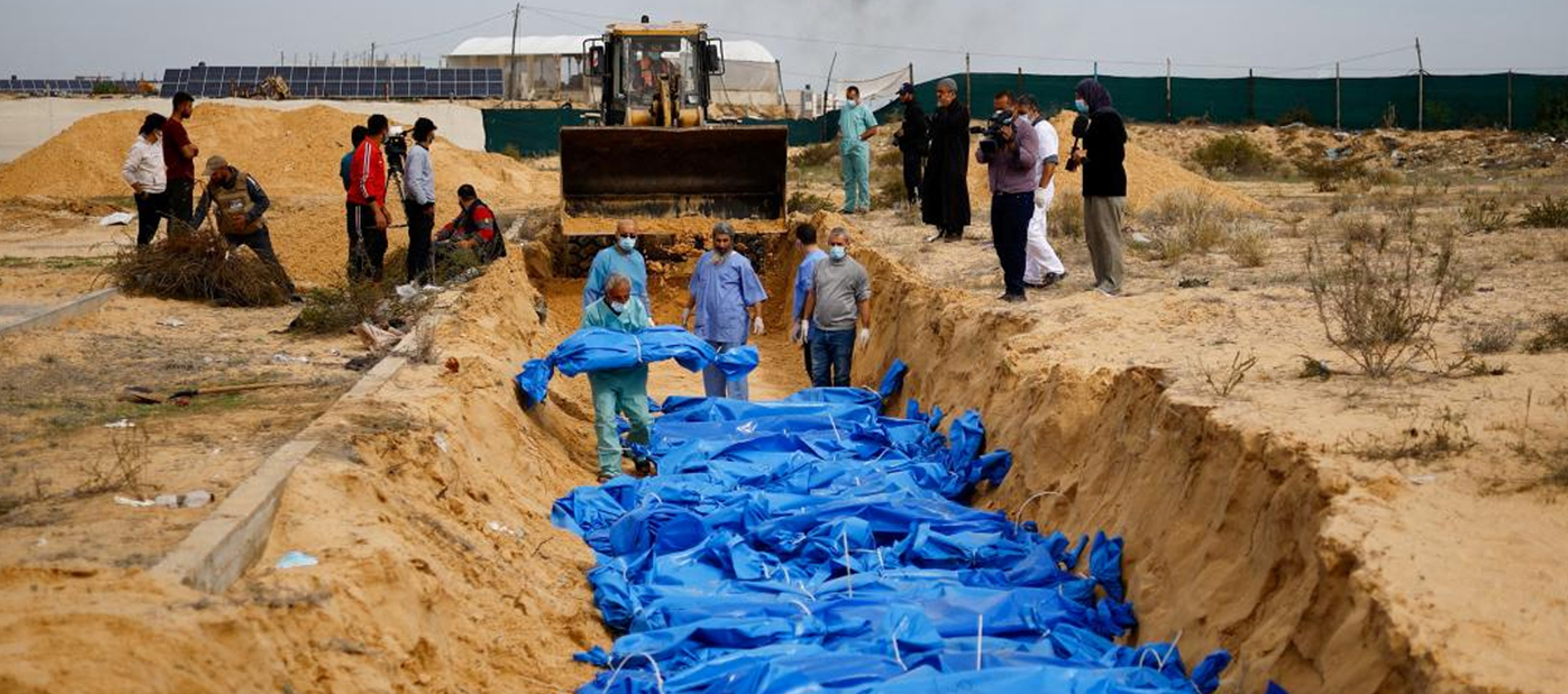
Since the start of the Israeli occupation of the West Bank and Gaza Strip in 1967, Israel (the occupying power) has committed numerous violations of international law. While some of these violations gained attention by the public and organizations locally and internationally,other violations have gained lesser attention. One of the unnoticed practices is Israel’s policy against the bodies of dead Palestinians. Israel is currently holding the bodies of many dead Palestinians in sites known as ‘Cemeteries of Numbers’, morgues, and refrigerators. While the exact number of Palestinians held in these cemeteries is not identified, JLAC believes (as per first-hand information gained directly from the families of the deceased persons) that the number is in the hundreds. JLAC has so far documented 302 cases. The bodies are those of; 1) Palestinian prisoners who died in Israeli prisons while serving imprisonment sentences,2) Palestinians who were killed during direct clash with Israeli occupying forces, 3) PLO fighters who engaged in direct combat with Israeli forces, 4) Palestinians killed/missing while attempting to cross into/ out from bordering Arab countries, and 5) those of suicide bombers. The majority of the documented cases belong to the third category. The total number of the held bodies likewise includes Palestinians and Arabs who are believed to have disappeared. Until recently, Israel has kept the sites of these cemeteries secret. The sites of the cemeteries are declared as closed military zones. Only four sites are relatively known to the public, but people are not allowed to approach them. These sites are the so-called; ‘Daughters of Jacob’s Bridge’ in the Golan Heights, ‘Adam Bridge’ in the Jordan Valley, ‘Refidim’ gravesite in the Jordan Valley, and a gravesite called ‘Shuheita’ in Wadi al-Hamam near Lake Tiberias


Such gravesites are not properly maintained and tombs are not distinguished with clear markers or names as to identify the identity of all the dead easily. This situation prevails despite the issuance of military order No.380109 on 1 September 1976 that stipulates the construction of tombs. The whole burial process continues to be disorganized. This makes it difficult or even impossible to identify the dead. Indeed, graves hold certain numbers or codes that are supposed to refer to each deceased’s complete details. However, in some cases, where DNA identification tests were conducted, the results of the tests and the details of the person in question did not match. The case of Issa Breijeyyeh is an example of this.This may refer to the negligence with which the burial took place. Moreover, some graves are not deep enough to cover the body and, as such, bodies may be uncovered and possibly fall prey to wild animals. Especially vulnerable to this are the bodies buried in loose sandy areas.


Both conventional and customary International Humanitarian Law has determined that contesting parties in armed conflict, whether international or domestic, must respect the dead whether killed in the battle field or died while in detention. Bodies must be collected, evacuated, buried in properly marked graves and their families must be notified.  International law prohibits the mutilation of dead bodies. Moreover, the return of dead bodies to the party that they belong to or upon the request of their next of kin is an international obligation duly recognized under international customary law and relevant treaties. The policy underpinning these rules is the natural right of a family to know the fate of its members. Whether someone is alive or not has bearings relating to inheritance and distribution, and the right of the widow to know the fate of her husband so that she can determine if she wants to re-marry or to re-organize her life to raise her children . In addition, there are moral and humanitarian concerns which dictate the burial of the dead in accordance with their religious belief. 


While the US Military Tribunal at Nuremburg stated that robbing a dead body “is and always has been a crime”, it may be, by analogy, added that mutilation of dead bodies, concealing the remains, or not returning the same is ( in the civilized conscious) a crime as well. It may even be considered a ‘war crime’ since it is injurious to the individual honor, a crime which may fall under the jurisdiction of the International Criminal Court. The Geneva Conventions of 1929 and 1949, and the First and Second Protocols, have created a corpus of international jurisprudence which found its way to national legislations in many states. This confirms that respect for dead persons who were killed in a combat situation has become an established international custom that must be upheld with esteem, any contradicting view runs in fact against human dignity. 


The Campaign 


Palestinians have constantly demanded Israel, the occupying power, to return the bodies of the dead. Although a handful of victims’ families sought out justice on an individual basis, never was there an organized and collective effort representing the entirety of the Palestinian and Arab dead held under Israeli custody prior to the formation of the National Campaign. In the past, a few families approached local chapters of the ICRC (International Committee of the Red Cross) and Israeli human rights NGOs, while others sought the legal assistance of Israeli lawyers in taking the matter to the Israeli Supreme Court. ‘The National Campaign for the Retrieval of Palestinian & Arab War Victims’ Bodies and the Disclosure of the Fate of 'Those Missing’ was launched in 2008, within the framework of organizing and directing a collective effort towards these ends. The Campaign aims to retrieve the bodies of the dead and disclose the fate of those missing through undertaking the following; 

         -  Litigation: Document and develop legal cases and take cases before the Israeli Supreme Court. 

         -  Advocacy: Raise public awareness (locally and intentionally) as to build public priority, appeal to international

            human  rights organizations for support and intervention, and place the cause on the political agenda of the

            Palestinian Authority, as well as that of governments abroad, etc.


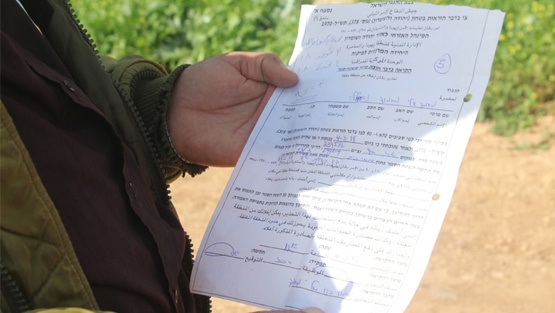
The Center has document 317 cases to date, and has gone on to open individual cases for each deceased and to individually correspond with the Israeli Civil Administration on behalf of those cases with documented proof (54 cases to date). The ten strongest cases were raised to the Israeli Supreme Court for appeal, as to attain a ‘prior precedence’ for the remaining and prospective cases. Although only one case outcome has been deliberated, much has been materialized in terms of the Campaign’s legal, political/diplomatic, community, and networking efforts. Fore and foremost, it succeeded in building trust and priority among the families of the dead and creating among them a local force of advocacy which is continually growing in number and support. The cause was brought to the attention of the media, as well as local authorities and was placed upon their political and diplomatic agendas as a result.The Palestinian Ministers’ Cabinet, as declared by the Prime Minister Dr. Salam Fayyad (after meeting with the Campaign’s leadership on August 2, 2009) officially adopted the Campaign and its objectives on August 3, 2009, and declared August 27th the ‘National Day for the Recovery of Palestinian & Arab War Victims’ Bodies and the Disclosure of the Fate of Those Missing’. Memorandums were sent to the ICRC requesting it to intervene by visiting the cemeteries, morgues, and refrigerators, and to report on the conditions in which the bodies are being kept (i.e. such specifications as grave depth), and to subsequently exert pressure on Israel’s Human Rights High Commissioner’s Office. Diligent efforts were also being made to attain the necessary permission to allow the families of the deceased to visit their current graves. The Campaign’s appeals to international human rights institutions and organizations are increasingly being met with heartfelt and positive responses. The Center has likewise been approached by interested local and international media agencies and journalists requesting campaign-related information and logistical support in interviewing victims’ families.


Moreover, growing community awareness is evident in both increased public support and participation in the Campaign’s activities, as well as related initiatives being independently launched by the local community. In terms of future plans; the Campaign’s sole legal path tread has been the Israeli judicial system. There is a need, more than ever, to find new means of demanding and retrieving the bodies of the deceased Palestinians and Arabs held in Israeli custody. Towards this end, the Campaign intends to widen the breath of its advocacy efforts as to include international members/ arms undertaking actions on an international level. Such actions may come to involve demonstrations being held by international bodies in front of Israeli Embassies abroad and direct memorandums being sent by internationals to their governments (or that of Israel) upon the Campaign’s behalf, among other actions. The Campaign’s leadership may likewise participate in international human rights conferences and possibly preside before human rights missions abroad. Moreover, in the coming year the Campaign likewise aims to embark on a mission to document and collect data concerning the dead persons detained in Israeli custody from neighboring Arab countries such as Jordan, Syria, Lebanon, and Egypt (number approximated in the hundreds). In parallel, these neighboring Arab countries must begin internal efforts to demand that the bodies of their deceased be relinquished from Israeli custody.


Development of Campaign Book; "We Hva eNames and We Have a Home Land"


The Campaign’s mounting achievements have only served to further augment the Center’s sense of ethical, national, and social responsibility towards this cause, and its drive to fulfill the families’ simple wish of honorably burying their dead. Towards the end of 2009, JLAC developed a book centering around this campaign entitled; ‘We Have Names and We Have a Homeland’. The book serves to catalogue some cases of the deceased and missing persons whose bodies remain withheld in Israeli custody. It features their photos and biographicalinformation and a selection of comprehensive stories, as collected and composed to thebest of JLAC’s ability. Such was undertaken as to bring to light and affirm, that, indeed, behindevery number there is a person and a family that grieves at their loss and at being deprivedthe right of burying them. Moreover, the book features excerpts from related internationalhumanitarian laws and existing Israeli policies and practices, as well as the future plans of thecampaign.


The Campaign’s First Legal Triumph 


The latest development in the ‘National Campaign in the Retrieval of War Victims’ Bodies and the Disclosure of the Fate of Those Missing’ comes in the form of an Israeli Authority decision to release the body of Mashour Saleh (whose body has been held in Israeli custody for the past 33 years) to his family through JLAC’s attorney. The decision to the petition submitted by JLAC to the Israeli Supreme Court (in November of 2009)  was relayed by the Israeli Military Commander in the West Bank . Identifying the body of Mashour Saleh involved exhuming and conducting DNA testing and several bodies.  Once identified, the body of Mashour Saleh was returned to his family in August of 2010.  A military funeral was organized in his honor.  
 
Mashour Talab Saleh was born in 1956 in the village of Arourah. He was educated in Arourah and Ramallah schools and afterwards, while in the prime of his life, he came to join up with a Palestinian militant group (the Democratic Front for the Liberation of Palestine). His militancy caused him to be wanted by the Israeli occupying forces and, as a result, to be forced to leave the occupied Palestinian territories. On May 17, 1976, he returned to the occupied territories along with his military patrol (comprised of three Palestinian fighters; Hafez Waheed Abu Zint from Nablus, Khaled Abu Zayed from Jaffa, and himself).   To complete their journey, the men crossed the Jordanian border and headed towards Nablus. Regrettably, the men were ambushed and killed by Israeli forces along the way near Jiftlek Camp.   Though it took 33 years, Mashour will soon be home.  He will reach his loved ones that await his bittersweet return and will at last rest from the exhaustion of numbers and placelessness.
 
JLAC’s lawyers are preparing the necessary documentation to submit several more petitions to the Israeli Supreme Court, towards retrieving other war victims’ bodies. JLAC anticipates submitting the petitions in the last quarter of 2010.


back
 
© 2013 All copyright reserved by JLAC